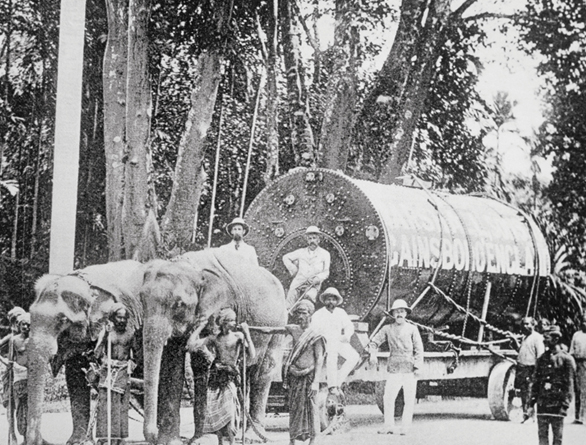
The story of Ceylon Tea begins with the introduction of tea to Ceylon (now Sri Lanka), going back to, as early as 1825, when the country was a British colony, This small island in the Indian ocean is renowned for growing the best black tea in the world, cultivated and processed as per uncompromising, conventional methods and quality.
The first tea plant was brought to Sri Lanka by the British, from China.Nearly 2 decades later in 1868, James Taylor, a Scottish coffee planter introduced tea to Ceylon and lanted 19 acres of tea in the city of Kandy in the central highlands of Sri Lank, as the first commercial tea plantation.Subsequently, in 1887, a British national, Henry andolph Trafford planted 230 acres of tea in the hill country, which became the largest tea plantation at that time. He became the pioneer planter in the tea industry in Sri Lanka. So much so, our company name "Traffford" relates to the history of Ceylon Tea.
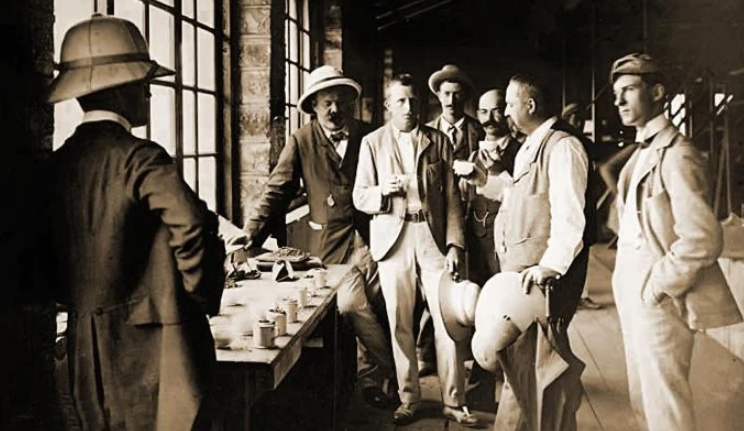
The new plantation crop was the leading foreign exchange earner for the country for the major part of the ensuing period of well over 150 years. It still maintains its position as a key industry in view of its contribution towards provision of employment to a very large workforce, besides being one of the highest foreign exchange earners. The landscape in Sri Lanka is perfect for tea harvesting. This cooler temperature, humidity and heavy rainfall in the central highlands provide a favorable climate for producing high quality tea.Ceylon Tea is a popular black tea and is famous for its bold flavor. But it can vary in taste depending on the type of tea and the climatic conditions where it is grown in the country as tea is grown in 4 different regions
The tea produced in these agro climatic regions are known world over as Nuwara Eliya, Dimbula, Uwa and Uda Pussallawa, in the high grown area,Kandy in the mid country, Ruhuna and Sabaragamuwa in the low country areas of Sri Lanka.The tea plant chemically is a very complex one. It contains thousands of complex organic chemical compounds. The key compounds are mainly in the young leaves. To ensure the best quality product, only the apical leaf (bud) and the two leaves immediately below it, are carefully harvested,
manually.During processing, in the factory, the chemicals in tea leaves undergo further chemical reaction, forming complexes with one another, giving rise to new compounds. The conditions in the factory need to be meticulously controlled to produce tea of uniform quality.
The tea produced in these agro climatic regions are known world over as Nuwara Eliya, Dimbula, Uwa and Uda Pussallawa, in the high grown area,Kandy in the mid country, Ruhuna and Sabaragamuwa in the low country areas of Sri Lanka.The tea plant chemically is a very complex one. It contains thousands of complex organic chemical compounds. The key compounds are mainly in the young leaves. To ensure the best quality product, only the apical leaf (bud) and the two leaves immediately below it, are carefully harvested, manually. During processing, in the factory, the chemicals in tea leaves undergo further chemical reactions, forming complexes with one another, giving rise to new compounds. The conditions in the factory need to be meticulously controlled to produce tea of uniform quality.The smell or the aroma of brewed tea, comes from thousands of volatile compounds (collectively known as the “aroma complex), formed during processing and released to the tea liquor… Thousands of non-volatile compounds in the tea liquor, result in the typical sense of taste in tea.The quantities and the proportions of the chemicals in young tea leaves vary from plant to plant. Therefore, modern tea plantations are raised vegetatively from cuttings of young shoots taken from mother plants selected for attributes of quality, yield, disease resistance, etc. These are called clones. Each selected mother clone is propagated in millions to ensure uniformity of attributes in tea fields.The quality attributes of tea depend not only on the clone but also very sensitive to agro climatic conditions. Thus, the same clone planted in the three main elevational categories, low, mid and high, on the basis of height above mean sea level, give teas of vastly different quality and flavor characteristics. They vary between even between too adjacent plantations.This makes Ceylon Tea unique, in that its characteristics cannot be duplicated. In the global tea market many teas, blended and packed in various countries, include a little Sri Lankan tea, to claim the famous brand.Teas Packed in Sri Lanka is the only guarantee of Pure Ceylon.